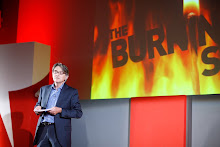
Conor Gearty, Liberty and Security (Polity Press, forthcoming)
All aspire to liberty and security in their lives but few people truly enjoy them. This book explains why this is so. In what Gearty calls our 'neo-democratic' world, the proclamation of universal liberty and security is mocked by facts on the ground: the vast inequalities in supposedly free societies; the authoritarian regimes with regular elections; and the terrible socio-economic deprivation camouflaged by cynically proclaimed commitments to human rights.
Conor Gearty's book is an explanation of how this has come about, providing also a criticism of the present age which tolerates it. He then goes on to set out a manifesto for a better future, a place where liberty and security can be rich platforms for everyone's life.
The book identifies neo-democracies as those places which play at democracy so as to disguise the injustice at their core. Nor is it just the new 'democracies' that have turned 'neo'; the so-called established democracies are hurtling in the same direction, as is the United Nations.
A new vision of universal freedom is urgently required. Drawing on scholarship in law, human rights and political science this book argues for just such a vision; one in which the great achievements of our democratic past are not jettisoned as easily as were the socialist ideals of the original democracy-makers.
Monday, 18 June 2012

Tuesday, 21 February 2012
Reflections on last night's law night at Occupy LSX
The discussion at Occupy LSX last night was about the role of law in seeking to change the way we understand the society in which we find ourselves.
Interestingly there was far less cynicism about law that there would have been twenty years ago. The excellent David Allen Green produced an anthem to law-adherence which was applauded rather than booed down (as it might have been not so long ago). David was right to remind us that lawlessness is something the rich and powerful are more adept at and able to do with greater impunity, so that we need to be very careful before we write off the rule of law - it remains as David said (quoting the great radical historian E P Thompson) ‘an unqualified public good’.
Why did the rule of law get such an easy ride?
I’d say this is because of the transformation we have seen in the English judiciary in the past two decades, moving from the blind defenders of the status quo that I recall when I first starting teaching civil liberties (in the Thatcher era) to the more nuanced, thoughtful people you encounter on the Bench at the present time.
An example of this was the Occupy LSX appeal in the Court of Appeal (decision on the case due on Wednesday) - it went very well from the occupiers’ point of view:
- they were treated with respect
- their lawyer (John Cooper QC) was warmly congratulated for having taken on the case
- the human rights issues were given time to be developed
- the individual litigants themselves had the chance of a ‘day in court’ that felt meaningful to them and was not just a charade.
This is all excellent news. But it does not mean that the appeal will succeed. I would still say the odds are stacked against.
And of course the judges might change again, losing the humanity which has marked recent appointments and reverting to hard-nosed type (historically the norm).
As we await the Court's ruling in the St Paul's case....
how do we define success?
Already the brave and extraordinary discipline shown by Occupy LSX, the organisational strength of the movement and its intelligent engagement with the issues have marked it out as a triumph. The case - taken against them of course and not by them - has been turned into a public soapbox, giving them a chance to explain their point of view and counter the demonization to be found elsewhere, in some of the Tabloid media, among the more hard-nosed City types and even - saddest of all - in St Paul’s itself where a noisy commitment to social justice has been shown to be risibly skin-deep.
Last night’s event was full of hope - hope that society can be transformed; hope that our culture can find the levels of solidarity that it so desperately needs; hope that equality can be achieved rather than merely spoken about.
But this hope never collapsed into utopian illusion.
Nor did it threaten at any time to morph into a cynical aggressiveness towards a public who refuse to share the dream.
There was an intelligent awareness of the time dreams take to be realised, of the hard work that utopia demands and of the need to be there for the long haul. Minds are not changed by singular actions, however singular. They are changed when society comes to regard these singular actions as the rule rather than the exception, when common sense shifts onto the side of the erstwhile heretic. This can take a long time or happen very quickly indeed. But it can always happen. No situation is so bad that dreams - with courage, determination and patience - cannot be realised.
I was proud to be involved last night and honoured to have been asked to speak.
Interestingly there was far less cynicism about law that there would have been twenty years ago. The excellent David Allen Green produced an anthem to law-adherence which was applauded rather than booed down (as it might have been not so long ago). David was right to remind us that lawlessness is something the rich and powerful are more adept at and able to do with greater impunity, so that we need to be very careful before we write off the rule of law - it remains as David said (quoting the great radical historian E P Thompson) ‘an unqualified public good’.
Why did the rule of law get such an easy ride?
I’d say this is because of the transformation we have seen in the English judiciary in the past two decades, moving from the blind defenders of the status quo that I recall when I first starting teaching civil liberties (in the Thatcher era) to the more nuanced, thoughtful people you encounter on the Bench at the present time.
An example of this was the Occupy LSX appeal in the Court of Appeal (decision on the case due on Wednesday) - it went very well from the occupiers’ point of view:
- they were treated with respect
- their lawyer (John Cooper QC) was warmly congratulated for having taken on the case
- the human rights issues were given time to be developed
- the individual litigants themselves had the chance of a ‘day in court’ that felt meaningful to them and was not just a charade.
This is all excellent news. But it does not mean that the appeal will succeed. I would still say the odds are stacked against.
And of course the judges might change again, losing the humanity which has marked recent appointments and reverting to hard-nosed type (historically the norm).
As we await the Court's ruling in the St Paul's case....
how do we define success?
Already the brave and extraordinary discipline shown by Occupy LSX, the organisational strength of the movement and its intelligent engagement with the issues have marked it out as a triumph. The case - taken against them of course and not by them - has been turned into a public soapbox, giving them a chance to explain their point of view and counter the demonization to be found elsewhere, in some of the Tabloid media, among the more hard-nosed City types and even - saddest of all - in St Paul’s itself where a noisy commitment to social justice has been shown to be risibly skin-deep.
Last night’s event was full of hope - hope that society can be transformed; hope that our culture can find the levels of solidarity that it so desperately needs; hope that equality can be achieved rather than merely spoken about.
But this hope never collapsed into utopian illusion.
Nor did it threaten at any time to morph into a cynical aggressiveness towards a public who refuse to share the dream.
There was an intelligent awareness of the time dreams take to be realised, of the hard work that utopia demands and of the need to be there for the long haul. Minds are not changed by singular actions, however singular. They are changed when society comes to regard these singular actions as the rule rather than the exception, when common sense shifts onto the side of the erstwhile heretic. This can take a long time or happen very quickly indeed. But it can always happen. No situation is so bad that dreams - with courage, determination and patience - cannot be realised.
I was proud to be involved last night and honoured to have been asked to speak.
Thursday, 19 January 2012
Reflections on yesterday's ruling on the St Paul's Protest
All flourishing Christian organisations need to steer a careful course between mammon and morality.
On the one hand there is the wealth, power and influence that flow out of such success, especially if it is millennia old (as with the Roman Catholic church) or backed by the state (as with Anglicanism): how can one bite the hand that feeds one if the food is so good and one’s corpulent body now so dependant? On the other hand there is the unsettling example of Jesus himself – uninterested in money; contemptuous of luxury and of worldly power; devoted to the needy (or as we would say today the disadvantaged).
Some churches solve this problem by assimilating mammon to morality - the good are good because they are rich, and vice versa. This is too obviously special pleading for the more thoughtful faiths for whom, however, the problem remains: how can they be rich and radical at the same time?
These churches usually manage to side-step this dilemma by using their knack of fine rhetoric to call upon others to act. A prime example is the Report Value and Values: Perceptions of Ethics in the City Today issued by the St Paul’s Institute in November last year, an excellent critique of the ethical emptiness of global capital out of the mouths of financial services practitioners themselves.
But by the time this Report came out, the Occupy LSX camp had arrived at St Pauls, sparking a crisis of identity for the great Cathedral that supports this ‘challenging and well-resourced space for conversation’ (as the Archbishop of Canterbury had described the Institute in June 2010).
With eviction proceedings to remove the camp having yesterday produced a judgment against the occupy group, things are likely to get worse before they get better for the cathedral. At the back of everyone’s mind will be the feeling that a rare opportunity has been missed for an heroic religious engagement, for action as well as words.
It had all begun so promisingly.
The camp had only arrived at St Pauls in October last year when the stock exchange proved impenetrable. The police did not initially act, and the Cathedral itself – in the ebullient and civil libertarian form of the Canon Chancellor Giles Fraser – was positively supportive. Services continued. The talk was of a presence until Christmas. Early compromises allowed visits to the Cathedral to continue. The peaceful nature of the protest was acknowledged by all, the atmosphere good. Treated with respect and properly self-regulated, given as Giles Fraser was later to say on Newsnight ‘nice cups of Anglican tea … and a warm embrace’, a camp such as this might well have grown into a benign witnesses to the need for radical change, as the anti-nuclear Greenham common women had done a generation before. And what a gift this would have been to a Church about to launch its critique of city capitalism.
Faced with an open goal, the senior church authorities promptly turned tail and shot into their own net.
The talk was suddenly all of health and safety and of the risk of fire. The advice of professionals in these fields was immediately accepted, leading first to closure of the Cathedral (soon shown to be quite unnecessary) and then to a legal action launched with the intention of expelling the protestors. When the latter action was suspended the more hard-nosed Corporation of London took on the job of clearing out the protestors, the custodians of the Cathedral whispering encouragement while trying to look the other way. By then the Cathedral had lost both Fraser and the Dean himself, Graeme Knowles.
The law appeared stacked against the protestors from the outset and the judgment yesterday can have come as no surprise, with both highways and planning law being deployed by the City to legitimise its effort to get the protestors removed, not just from the areas all around the Cathedral but from the Cathedral land as well.
Of course the protestors pleaded the right to freedom of expression under the Human Rights Act but that measure ws always unlikely greatly to assist. The European Court of Human Rights has been reluctant to extend its protection to those who invade private property in the effort to get heard, and the same has now proved to be true (so far as this case is concerned) of deliberate efforts to obstruct the highway for the same purpose. Lindblom J had the job of assessing the proportionality or reasonableness of the disruption as against its value as speech - and here again the background hostility of the Cathedral was likely to weigh heavily against the Camp.
With this ruling handed down, the case is already shaping up to resemble the Dale Farm debacle, with endless litigation, media summits, appeals, further clarifications of court orders and - eventually - a nasty moment when the camp is physically dismantled by the authorities.
If and when this does come about, the Cathedral will have been primarily responsible. Had it adopted Fraser’s line, the protestors would probably be gone by now (as they had always intended), the Institute’s report on the city would be a widely admired and much read document, and the church’s commitment to economic justice would have been given a tremendous boost.
Instead....
We have this spectacle of a great cathedral acting not as a focus for Christian action but as a grand religious NIMBY.
The chance to undo this damage will not come about - opportunities of the sort offered by the Occupy movement are rare. No doubt there will be many more remarks such as that of the Revd Michael Hampel, Canon Precentor who commented of the Value and Values report that "Action is a crucial goal of the protest camp outside St Paul’s Cathedral. We hope that the telling findings of this report can provide a solid foundation for future engagement and highlight issues where action might be of mutual concern for all sides of the debate.” This kind of comment is so within the comfort zone of the Church to be indistinguishable from complacency.
At Mass at the start of January celebrating the Epiphany, Catholic Christians had Psalm 71:
‘For he shall save the poor when they cry and the needy who are helpless. He will have pity on the weak and save the lives of the poor.’
What kind of an epiphany has St Paul’s offered the world this Christmas season?
On the one hand there is the wealth, power and influence that flow out of such success, especially if it is millennia old (as with the Roman Catholic church) or backed by the state (as with Anglicanism): how can one bite the hand that feeds one if the food is so good and one’s corpulent body now so dependant? On the other hand there is the unsettling example of Jesus himself – uninterested in money; contemptuous of luxury and of worldly power; devoted to the needy (or as we would say today the disadvantaged).
Some churches solve this problem by assimilating mammon to morality - the good are good because they are rich, and vice versa. This is too obviously special pleading for the more thoughtful faiths for whom, however, the problem remains: how can they be rich and radical at the same time?
These churches usually manage to side-step this dilemma by using their knack of fine rhetoric to call upon others to act. A prime example is the Report Value and Values: Perceptions of Ethics in the City Today issued by the St Paul’s Institute in November last year, an excellent critique of the ethical emptiness of global capital out of the mouths of financial services practitioners themselves.
But by the time this Report came out, the Occupy LSX camp had arrived at St Pauls, sparking a crisis of identity for the great Cathedral that supports this ‘challenging and well-resourced space for conversation’ (as the Archbishop of Canterbury had described the Institute in June 2010).
With eviction proceedings to remove the camp having yesterday produced a judgment against the occupy group, things are likely to get worse before they get better for the cathedral. At the back of everyone’s mind will be the feeling that a rare opportunity has been missed for an heroic religious engagement, for action as well as words.
It had all begun so promisingly.
The camp had only arrived at St Pauls in October last year when the stock exchange proved impenetrable. The police did not initially act, and the Cathedral itself – in the ebullient and civil libertarian form of the Canon Chancellor Giles Fraser – was positively supportive. Services continued. The talk was of a presence until Christmas. Early compromises allowed visits to the Cathedral to continue. The peaceful nature of the protest was acknowledged by all, the atmosphere good. Treated with respect and properly self-regulated, given as Giles Fraser was later to say on Newsnight ‘nice cups of Anglican tea … and a warm embrace’, a camp such as this might well have grown into a benign witnesses to the need for radical change, as the anti-nuclear Greenham common women had done a generation before. And what a gift this would have been to a Church about to launch its critique of city capitalism.
Faced with an open goal, the senior church authorities promptly turned tail and shot into their own net.
The talk was suddenly all of health and safety and of the risk of fire. The advice of professionals in these fields was immediately accepted, leading first to closure of the Cathedral (soon shown to be quite unnecessary) and then to a legal action launched with the intention of expelling the protestors. When the latter action was suspended the more hard-nosed Corporation of London took on the job of clearing out the protestors, the custodians of the Cathedral whispering encouragement while trying to look the other way. By then the Cathedral had lost both Fraser and the Dean himself, Graeme Knowles.
The law appeared stacked against the protestors from the outset and the judgment yesterday can have come as no surprise, with both highways and planning law being deployed by the City to legitimise its effort to get the protestors removed, not just from the areas all around the Cathedral but from the Cathedral land as well.
Of course the protestors pleaded the right to freedom of expression under the Human Rights Act but that measure ws always unlikely greatly to assist. The European Court of Human Rights has been reluctant to extend its protection to those who invade private property in the effort to get heard, and the same has now proved to be true (so far as this case is concerned) of deliberate efforts to obstruct the highway for the same purpose. Lindblom J had the job of assessing the proportionality or reasonableness of the disruption as against its value as speech - and here again the background hostility of the Cathedral was likely to weigh heavily against the Camp.
With this ruling handed down, the case is already shaping up to resemble the Dale Farm debacle, with endless litigation, media summits, appeals, further clarifications of court orders and - eventually - a nasty moment when the camp is physically dismantled by the authorities.
If and when this does come about, the Cathedral will have been primarily responsible. Had it adopted Fraser’s line, the protestors would probably be gone by now (as they had always intended), the Institute’s report on the city would be a widely admired and much read document, and the church’s commitment to economic justice would have been given a tremendous boost.
Instead....
We have this spectacle of a great cathedral acting not as a focus for Christian action but as a grand religious NIMBY.
The chance to undo this damage will not come about - opportunities of the sort offered by the Occupy movement are rare. No doubt there will be many more remarks such as that of the Revd Michael Hampel, Canon Precentor who commented of the Value and Values report that "Action is a crucial goal of the protest camp outside St Paul’s Cathedral. We hope that the telling findings of this report can provide a solid foundation for future engagement and highlight issues where action might be of mutual concern for all sides of the debate.” This kind of comment is so within the comfort zone of the Church to be indistinguishable from complacency.
At Mass at the start of January celebrating the Epiphany, Catholic Christians had Psalm 71:
‘For he shall save the poor when they cry and the needy who are helpless. He will have pity on the weak and save the lives of the poor.’
What kind of an epiphany has St Paul’s offered the world this Christmas season?
Wednesday, 18 January 2012
Abu Qatada v UK
First Article 3.
In the Abu Qatada case the European Court of Human Rights has ruled that he is not likely to be tortured or ‘ill-treated’ in Jordan if he is returned there to face the authorities.
Now this is, ultimately, a question of judgment for the court, based on an assessment of probability on the current facts. It could theoretically arise in a case involving Sweden or Norway just as much as it does in relation to Jordan or (for that matter) Libya or Egypt. It doesn’t come up because it never even occurs to anyone that such ill-treatment might occur. The thought, though, is uppermost when these other places are the likely recipients of expelled European residents.
Memoranda of Understanding are just devices for rebutting the inference of likely ill-treatment that is made simply on the basis of the record of countries like these. It is neither logical nor fair to rule them out as evidence simply because their having been volunteered proves irretrievable bad faith.
The weight to give them is quite another matter.
The Strasbourg court has rejected such memoranda in the past. In Abu Qatada, the court accepted that the facts before it (including of course - and I agree critically - the memoranda agreed by the British and the Jordanians as to how the applicant would be treated) did not give rise to the ‘real risk’ of ill-treatment necessary for their jurisdiction to prohibit the removal to kick in. As the Court says ‘its only task is to examine whether the assurances obtained in a particular case are sufficient to remove any real risk of ill-treatment’.
Commentators critical of this ruling have to accept that what they are doing is questioning a judgment of the court on the facts. If the Government were to do this, no doubt the human rights activists would be furious.
Now Article 6.
This ruling is a very strong one and worth defending if this case goes further up the Strasbourg hierarchy, as it may well do.
The Court found that Abu Qatada has successfully ‘discharged the burden that could be fairly imposed on him of establishing the evidence against him [in Jordan] was obtained by torture’ and that he has also therefore shown that there would be ‘a real risk of a flagrant denial of justice if he were deported to Jordan.’ This strikes me as a strong finding and a reflection of how torture (of anyone) should never be allowed to pay.
But….
How can this Article 6 ruling be gratefully received by commentators (based as it is on a finding of a set of facts) while the court’s other ruling on Article 3 (equally based on a finding of facts) is rejected?
Are the critics allowing their feelings to run away with them, turning the Strasbourg court into an a la carte menu from which only the bits agreeable to their previously identified positions are to be selected?
Does such partisanship do the advocacy of human rights any favours?
In the Abu Qatada case the European Court of Human Rights has ruled that he is not likely to be tortured or ‘ill-treated’ in Jordan if he is returned there to face the authorities.
Now this is, ultimately, a question of judgment for the court, based on an assessment of probability on the current facts. It could theoretically arise in a case involving Sweden or Norway just as much as it does in relation to Jordan or (for that matter) Libya or Egypt. It doesn’t come up because it never even occurs to anyone that such ill-treatment might occur. The thought, though, is uppermost when these other places are the likely recipients of expelled European residents.
Memoranda of Understanding are just devices for rebutting the inference of likely ill-treatment that is made simply on the basis of the record of countries like these. It is neither logical nor fair to rule them out as evidence simply because their having been volunteered proves irretrievable bad faith.
The weight to give them is quite another matter.
The Strasbourg court has rejected such memoranda in the past. In Abu Qatada, the court accepted that the facts before it (including of course - and I agree critically - the memoranda agreed by the British and the Jordanians as to how the applicant would be treated) did not give rise to the ‘real risk’ of ill-treatment necessary for their jurisdiction to prohibit the removal to kick in. As the Court says ‘its only task is to examine whether the assurances obtained in a particular case are sufficient to remove any real risk of ill-treatment’.
Commentators critical of this ruling have to accept that what they are doing is questioning a judgment of the court on the facts. If the Government were to do this, no doubt the human rights activists would be furious.
Now Article 6.
This ruling is a very strong one and worth defending if this case goes further up the Strasbourg hierarchy, as it may well do.
The Court found that Abu Qatada has successfully ‘discharged the burden that could be fairly imposed on him of establishing the evidence against him [in Jordan] was obtained by torture’ and that he has also therefore shown that there would be ‘a real risk of a flagrant denial of justice if he were deported to Jordan.’ This strikes me as a strong finding and a reflection of how torture (of anyone) should never be allowed to pay.
But….
How can this Article 6 ruling be gratefully received by commentators (based as it is on a finding of a set of facts) while the court’s other ruling on Article 3 (equally based on a finding of facts) is rejected?
Are the critics allowing their feelings to run away with them, turning the Strasbourg court into an a la carte menu from which only the bits agreeable to their previously identified positions are to be selected?
Does such partisanship do the advocacy of human rights any favours?
Wednesday, 11 January 2012
St Paul's - reflections on the court ruling on eviction
All flourishing Christian organisations need to steer a careful course between mammon and morality.
On the one hand there is the wealth, power and influence that flow out of such success, especially if it is millennia old (as with the Roman Catholic church) or backed by the state (as with Anglicanism): how can one bite the hand that feeds one if the food is so good and one’s corpulent body now so dependant? On the other hand there is the unsettling example of Jesus himself – uninterested in money; contemptuous of luxury and of worldly power; devoted to the needy (or as we would say today the disadvantaged).
Some churches solve this problem by assimilating mammon to morality - the good are good because they are rich, and vice versa. This is too obviously special pleading for the more thoughtful faiths for whom, however, the problem remains: how can they be rich and radical at the same time?
These churches usually manage to side-step this dilemma by using their knack of fine rhetoric to call upon others to act. A prime example is the Report Value and Values: Perceptions of Ethics in the City Today issued by the St Paul’s Institute in November last year, an excellent critique of the ethical emptiness of global capital out of the mouths of financial services practitioners themselves.
But by the time this Report came out, the Occupy LSX camp had arrived at St Pauls, sparking a crisis of identity for the great Cathedral that supports this ‘challenging and well-resourced space for conversation’ (as the Archbishop of Canterbury had described the Institute in June 2010).
With eviction proceedings to remove the camp having yesterday produced a judgment against the occupy group, things are likely to get worse before they get better for the cathedral. At the back of everyone’s mind will be the feeling that a rare opportunity has been missed for an heroic religious engagement, for action as well as words.
It had all begun so promisingly.
The camp had only arrived at St Pauls in October last year when the stock exchange proved impenetrable. The police did not initially act, and the Cathedral itself – in the ebullient and civil libertarian form of the Canon Chancellor Giles Fraser – was positively supportive. Services continued. The talk was of a presence until Christmas. Early compromises allowed visits to the Cathedral to continue. The peaceful nature of the protest was acknowledged by all, the atmosphere good. Treated with respect and properly self-regulated, given as Giles Fraser was later to say on Newsnight ‘nice cups of Anglican tea … and a warm embrace’, a camp such as this might well have grown into a benign witnesses to the need for radical change, as the anti-nuclear Greenham common women had done a generation before. And what a gift this would have been to a Church about to launch its critique of city capitalism.
Faced with an open goal, the senior church authorities promptly turned tail and shot into their own net.
The talk was suddenly all of health and safety and of the risk of fire. The advice of professionals in these fields was immediately accepted, leading first to closure of the Cathedral (soon shown to be quite unnecessary) and then to a legal action launched with the intention of expelling the protestors. When the latter action was suspended the more hard-nosed Corporation of London took on the job of clearing out the protestors, the custodians of the Cathedral whispering encouragement while trying to look the other way. By then the Cathedral had lost both Fraser and the Dean himself, Graeme Knowles.
The law appeared stacked against the protestors from the outset and the judgment yesterday can have come as no surprise, with both highways and planning law being deployed by the City to legitimise its effort to get the protestors removed, not just from the areas all around the Cathedral but from the Cathedral land as well.
Of course the protestors pleaded the right to freedom of expression under the Human Rights Act but that measure ws always unlikely greatly to assist. The European Court of Human Rights has been reluctant to extend its protection to those who invade private property in the effort to get heard, and the same has now proved to be true (so far as this case is concerned) of deliberate efforts to obstruct the highway for the same purpose. Lindblom J had the job of assessing the proportionality or reasonableness of the disruption as against its value as speech - and here again the background hostility of the Cathedral was likely to weigh heavily against the Camp.
With this ruling handed down, the case is already shaping up to resemble the Dale Farm debacle, with endless litigation, media summits, appeals, further clarifications of court orders and - eventually - a nasty moment when the camp is physically dismantled by the authorities.
If and when this does come about, the Cathedral will have been primarily responsible. Had it adopted Fraser’s line, the protestors would probably be gone by now (as they had always intended), the Institute’s report on the city would be a widely admired and much read document, and the church’s commitment to economic justice would have been given a tremendous boost.
Instead....
We have this spectacle of a great cathedral acting not as a focus for Christian action but as a grand religious NIMBY.
The chance to undo this damage will not come about - opportunities of the sort offered by the Occupy movement are rare. No doubt there will be many more remarks such as that of the Revd Michael Hampel, Canon Precentor who commented of the Value and Values report that "Action is a crucial goal of the protest camp outside St Paul’s Cathedral. We hope that the telling findings of this report can provide a solid foundation for future engagement and highlight issues where action might be of mutual concern for all sides of the debate.” This kind of comment is so within the comfort zone of the Church to be indistinguishable from complacency.
At Mass at the start of January celebrating the Epiphany, Catholic Christians had Psalm 71:
‘For he shall save the poor when they cry and the needy who are helpless. He will have pity on the weak and save the lives of the poor.’
What kind of an epiphany has St Paul’s offered the world this Christmas season?
On the one hand there is the wealth, power and influence that flow out of such success, especially if it is millennia old (as with the Roman Catholic church) or backed by the state (as with Anglicanism): how can one bite the hand that feeds one if the food is so good and one’s corpulent body now so dependant? On the other hand there is the unsettling example of Jesus himself – uninterested in money; contemptuous of luxury and of worldly power; devoted to the needy (or as we would say today the disadvantaged).
Some churches solve this problem by assimilating mammon to morality - the good are good because they are rich, and vice versa. This is too obviously special pleading for the more thoughtful faiths for whom, however, the problem remains: how can they be rich and radical at the same time?
These churches usually manage to side-step this dilemma by using their knack of fine rhetoric to call upon others to act. A prime example is the Report Value and Values: Perceptions of Ethics in the City Today issued by the St Paul’s Institute in November last year, an excellent critique of the ethical emptiness of global capital out of the mouths of financial services practitioners themselves.
But by the time this Report came out, the Occupy LSX camp had arrived at St Pauls, sparking a crisis of identity for the great Cathedral that supports this ‘challenging and well-resourced space for conversation’ (as the Archbishop of Canterbury had described the Institute in June 2010).
With eviction proceedings to remove the camp having yesterday produced a judgment against the occupy group, things are likely to get worse before they get better for the cathedral. At the back of everyone’s mind will be the feeling that a rare opportunity has been missed for an heroic religious engagement, for action as well as words.
It had all begun so promisingly.
The camp had only arrived at St Pauls in October last year when the stock exchange proved impenetrable. The police did not initially act, and the Cathedral itself – in the ebullient and civil libertarian form of the Canon Chancellor Giles Fraser – was positively supportive. Services continued. The talk was of a presence until Christmas. Early compromises allowed visits to the Cathedral to continue. The peaceful nature of the protest was acknowledged by all, the atmosphere good. Treated with respect and properly self-regulated, given as Giles Fraser was later to say on Newsnight ‘nice cups of Anglican tea … and a warm embrace’, a camp such as this might well have grown into a benign witnesses to the need for radical change, as the anti-nuclear Greenham common women had done a generation before. And what a gift this would have been to a Church about to launch its critique of city capitalism.
Faced with an open goal, the senior church authorities promptly turned tail and shot into their own net.
The talk was suddenly all of health and safety and of the risk of fire. The advice of professionals in these fields was immediately accepted, leading first to closure of the Cathedral (soon shown to be quite unnecessary) and then to a legal action launched with the intention of expelling the protestors. When the latter action was suspended the more hard-nosed Corporation of London took on the job of clearing out the protestors, the custodians of the Cathedral whispering encouragement while trying to look the other way. By then the Cathedral had lost both Fraser and the Dean himself, Graeme Knowles.
The law appeared stacked against the protestors from the outset and the judgment yesterday can have come as no surprise, with both highways and planning law being deployed by the City to legitimise its effort to get the protestors removed, not just from the areas all around the Cathedral but from the Cathedral land as well.
Of course the protestors pleaded the right to freedom of expression under the Human Rights Act but that measure ws always unlikely greatly to assist. The European Court of Human Rights has been reluctant to extend its protection to those who invade private property in the effort to get heard, and the same has now proved to be true (so far as this case is concerned) of deliberate efforts to obstruct the highway for the same purpose. Lindblom J had the job of assessing the proportionality or reasonableness of the disruption as against its value as speech - and here again the background hostility of the Cathedral was likely to weigh heavily against the Camp.
With this ruling handed down, the case is already shaping up to resemble the Dale Farm debacle, with endless litigation, media summits, appeals, further clarifications of court orders and - eventually - a nasty moment when the camp is physically dismantled by the authorities.
If and when this does come about, the Cathedral will have been primarily responsible. Had it adopted Fraser’s line, the protestors would probably be gone by now (as they had always intended), the Institute’s report on the city would be a widely admired and much read document, and the church’s commitment to economic justice would have been given a tremendous boost.
Instead....
We have this spectacle of a great cathedral acting not as a focus for Christian action but as a grand religious NIMBY.
The chance to undo this damage will not come about - opportunities of the sort offered by the Occupy movement are rare. No doubt there will be many more remarks such as that of the Revd Michael Hampel, Canon Precentor who commented of the Value and Values report that "Action is a crucial goal of the protest camp outside St Paul’s Cathedral. We hope that the telling findings of this report can provide a solid foundation for future engagement and highlight issues where action might be of mutual concern for all sides of the debate.” This kind of comment is so within the comfort zone of the Church to be indistinguishable from complacency.
At Mass at the start of January celebrating the Epiphany, Catholic Christians had Psalm 71:
‘For he shall save the poor when they cry and the needy who are helpless. He will have pity on the weak and save the lives of the poor.’
What kind of an epiphany has St Paul’s offered the world this Christmas season?
Subscribe to:
Posts (Atom)